
July Recap | Disease, Insect, Pollination Update
Well, we are in the homestretch of the season as far as any management changes we can make to this crop yet. The rest is still up to mother nature. Some timely rains in July have really been beneficial to the corn and beans. The crop is still in its peak moisture demand stages during reproduction. Corn and beans need on average 2 inches of moisture a week either from rainfall or soil moisture through the grain fill periods. Water demand will slow down once corn gets to the dent stage, and soybeans once the pods are completely filled. Those stages are also when we can generally stop with fungicide or insecticide applications. Corn and soybeans typically reach these stages mid to late August.
Disease Report
There have been a lot of fungicides sprayed since mid-July on corn, and a few second passes in corn are happening this week now. A few farmers applied early fungicides just prior to, are at first tassel, and are coming back now at the R3 stage. With the disease pressure we are seeing, which is generally low, I feel confident that a premium fungicide applied after full tassel and during the R1 stage will see the biggest benefit. I am seeing Southern Rust in a few corn fields, even ones that have been sprayed, but it is low in the canopy, and the fungicide should protect the upper part of the canopy for photosynthesis and grain fill. I have not seen much of any Tar Spot, although I hear there are some hot spots north of us, and if we cool down more in August, the Tar Spot could come in late.
Here is a picture of the Southern Rust I am seeing in the corn. This is still in the early stage, but we all remember what it can do if conditions are favorable for development.
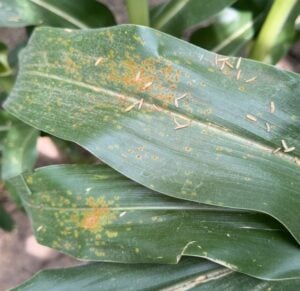
Figure 1 – Southern Rust
Another issue I am seeing in corn, which might be confused with a disease, is what I believe to be Sun scald. We see this more often in beans, but there are certain corn fields showing it this year. It first looks like Northern Corn Leaf Blight, but the lesions are mostly around the arch in the leaf where the sun hits, and towards the tip of the leaf that faces the sun. It is basically a sunburn on the leaf due to the moisture on the leaf acting like a magnifying lens.
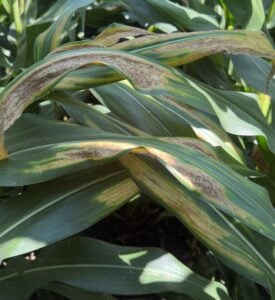
Figure 2 – Sun Scald
Pollination Issues
The bigger concern I am finding in corn now is some pollination issues. This could be a decent concern for a few fields or hybrids. It appears that the issues were at the very beginning of the pollination window and the early silks not receiving pollen. Remember that the bottom silks are the first to appear. If the pollen shed is not happening at this time, or the pollen is not viable, those silks don’t get pollinated and we can see the later silks cover up those early ones and they may never get pollinated. Or we are seeing some fields or hybrids where we have two distinct times of pollination as we see kernels in different stages of development. My theory is that in a few hybrids, the tassels did not fully emerge from the flag leaf before it started to shed pollen. The pollen was trapped in the flag leaf while the silks were exposed and waiting. Once the tassel was big enough to push out of the flag leaf, those early emerging silks were already covered up. I have seen some tassels with very few branches again this year, which does not help them to “push” their way out of the flag leaf. If there is a large number of kernels not pollinated, those ears will not completely fill in. But if the blank kernels are more random, the adjacent kernels will fill in the gaps and the yield loss will be very minimal.
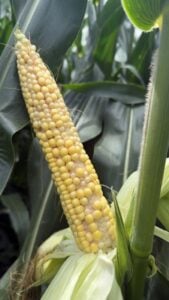
Figure 3 – Gaps in pollination of lower kernels
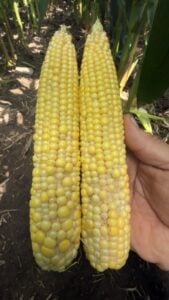
Figure 4 – Gaps starting to fill in
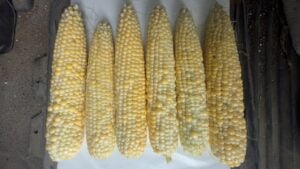
Figure 5 – All pollinated but at different times
We obviously had some hot days and warm nights which can stress the corn during pollination too. Pollen does not shed from the tassel when it is wet, so the dew must dry first, but then if the temperature is above 85 degrees, pollen shed slows down too. So, on those hot days we had in July, there may have been only a short window between the dew drying, and hot temperatures. Pollen can shed in the evenings as the weather cools back down.
Soybean Report
I haven’t been running into many issues in the soybeans. Most bean fields are getting very tall, and are starting to fill the lower pods, while still flowering at the top. So, if we keep the rain coming, we could see good late pod development. I have seen some soybean aphids, mostly in non seed treated fields, or fields adjacent to rivers and tree lines. But for the most part the numbers have been staying very low. I have also seen just a field or two with White Mold showing up, and a few instance of Rhizoctonia root rot. But for the most part, the biggest concern in beans may be standability if they continue to grow tall and put on pod weight.
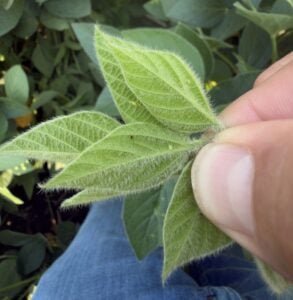
Figure 6 – A few aphids on the top leaves
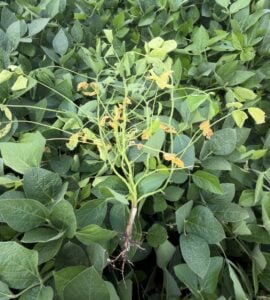
Figure 7 – Random plant with Rhizoctonia
We are slightly ahead in heat units compared to normal, although not as much as I would have expected. We did have some cooler weather in the second half of June, and the cool down last week as well.
Heat Units Accumulated
| wdt_ID | wdt_created_by | wdt_created_at | wdt_last_edited_by | wdt_last_edited_at | Plant Date | Total |
|---|---|---|---|---|---|---|
| 1 | emilybailey | 04/02/2026 02:20 PM | emilybailey | 08/04/2026 10:41 AM | April 21st | 1830 (+110) |
| 3 | emilybailey | 05/09/2026 07:23 AM | emilybailey | 08/04/2026 10:41 AM | May 1st | 1740 (+100) |
Rainfall Totals (New Hampton)
RainFall Totals
| wdt_ID | wdt_created_by | wdt_created_at | wdt_last_edited_by | wdt_last_edited_at | Month | Total | 30 Year Average | Total |
|---|---|---|---|---|---|---|---|---|
| 1 | emilybailey | 04/02/2026 02:12 PM | emilybailey | 06/05/2026 01:00 PM | April | 5.63" | 4.2" | |
| 2 | emilybailey | 04/02/2026 02:12 PM | emilybailey | 06/05/2026 01:00 PM | May | 2.95" | 4.8" | |
| 3 | emilybailey | 04/02/2026 02:12 PM | emilybailey | 07/02/2026 11:08 AM | June | 3.2" | 6.3" | |
| 4 | emilybailey | 04/02/2026 02:13 PM | emilybailey | 08/04/2026 10:42 AM | July | 7.76" | 4.7" | |
| 5 | emilybailey | 04/02/2026 02:13 PM | emilybailey | 04/03/2026 07:30 AM | August | 4.5" | ||
If you have any concerns about your fields, or need something looked at, please reach out to me.
Bob Sobolik
641.330.1815